

How Baylor’s MS Fellowship program is creating hope for patients
For decades, a multiple sclerosis diagnosis carried a quiet verdict. No cure. No hope.
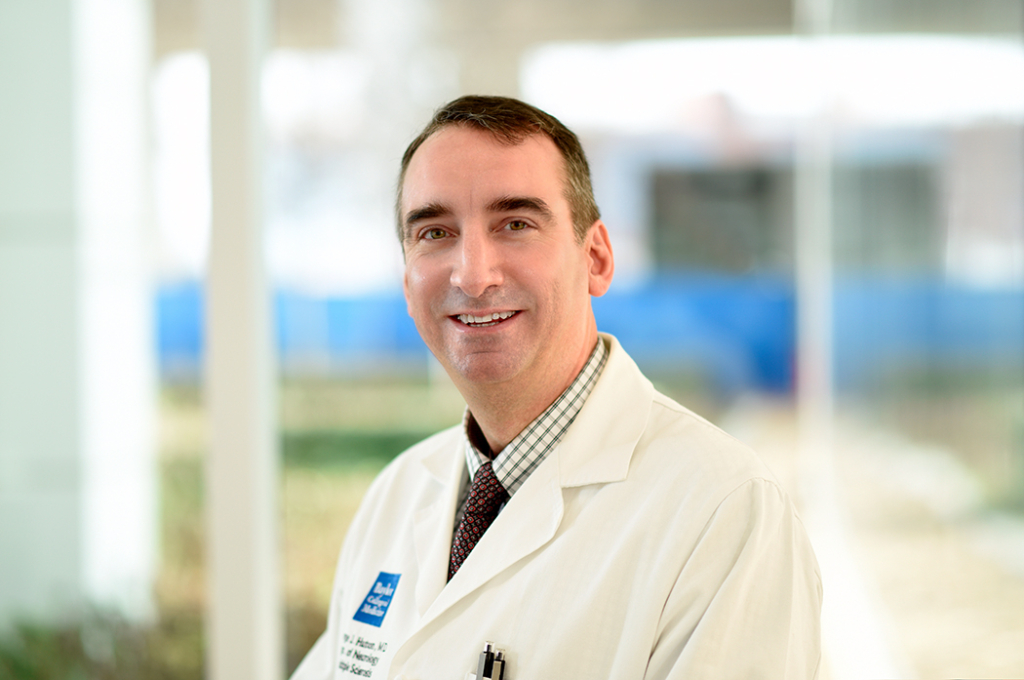
George Hutton, M.D., medical director of the Maxine Mesinger Multiple Sclerosis (MS) Comprehensive Care Center and program director of Baylor College of Medicine’s Multiple Sclerosis Fellowship Program, still hears that fear in the exam room.
“It can be very scary and devastating for someone to learn they have a diagnosis of multiple sclerosis,” he said.
But the disease patients face today is not the disease of 15 years ago.
“Today, we are often able to diagnose it early and intervene with effective medications shown to greatly reduce the risk of long-term disability,” Dr. Hutton said.
Baylor has helped drive that progress, taking part in more than 50 clinical trials over the past two decades, including registry trials for most of today’s Food and Drug Administration-approved MS therapies and research into stem cell transplantation for MS.
Behind that research sits something less visible but just as vital: a pipeline of highly trained specialists. After a full neurology residency, physicians who choose an additional year of MS fellowship training gain expertise in complex, immune-active medications, symptom management and clinical trial methodology that general neurologists rarely encounter in the same depth. That training matters because MS still resists a single diagnostic test, and recognizing and treating it well depends on a specialist’s judgment. Without that access, Dr. Hutton notes, patients risk delayed diagnosis and treatment, which can lead to worse long-term outcomes.
Baylor’s fellows train across three settings—the Baylor MS Clinic, Texas Children’s Hospital and Harris Health—exposing them to a wide range of patients and challenges. The fellows often are the first to sit with patients for the long conversations MS care demands before carrying those details back to physicians like Dr. Hutton to shape treatment in real time.
One Houston family, who wishes to remain anonymous, experienced firsthand how much of a difference the fellows make. Diagnosed at age 22, their daughter has now been under the care of Dr. Hutton and his MS fellows for five years. While this has been a difficult journey, the family has also been astounded by the fellows’ impact, which has been, in their words, “almost as life-changing as the medicine.”
They describe watching MS fellows’ unparalleled compassion, curiosity and care driven by their deeper understanding of MS advances, asking questions other doctors may not have considered and bringing new perspectives from research to a more hopeful future. This comes as the broader science is swiftly moving toward not just managing MS, but slowing its progression, something long thought to be impossible.
It was the fellows’ direct impact that inspired this family to become active supporters of the Baylor MS Fellowship Program. While funding research is key, funding the fellows helps more patients be seen and heard.
“It’s not the case anymore that you can’t do anything about MS,” a family member said. “You can do something about it. Things are more hopeful thanks to advanced research and fellows and doctors working together. You may think your donation can’t make a difference, but every dollar donated helps change lives. This MS fellowship program has given us hope.”
For Dr. Hutton, a graduate of Baylor’s MS Fellowship Program himself, independent donor funding has been its own source of hope.
“As one of only a few MS centers in the world to be involved with such cutting-edge clinical research trials and to deliver this standard of care, this kind of philanthropy is extremely helpful in allowing us to continue the excellence in fellowship training that we provide at Baylor College of Medicine.”
To make a gift to support the MS Fellowship program, click here.