


Understanding the heart-brain axis and its implication for developing dementia
When asked what organ a heart attack puts at risk, most people will name the heart. Christie Ballantyne, M.D., would add the brain.
Dr. Ballantyne, professor and section chief of Cardiology and Cardiovascular Research at Baylor College of Medicine, directs a core laboratory for the Atherosclerosis Risk in Communities (ARIC) study, which has followed nearly 16,000 Americans since 1987. During one recent round of visits with participants averaging 75 years of age, those with cardiovascular disease were more likely to develop dementia than to have another heart attack or stroke.
“That’s a pretty terrifying fact,” he said. “And most cardiologists and most patients are not aware of it.”
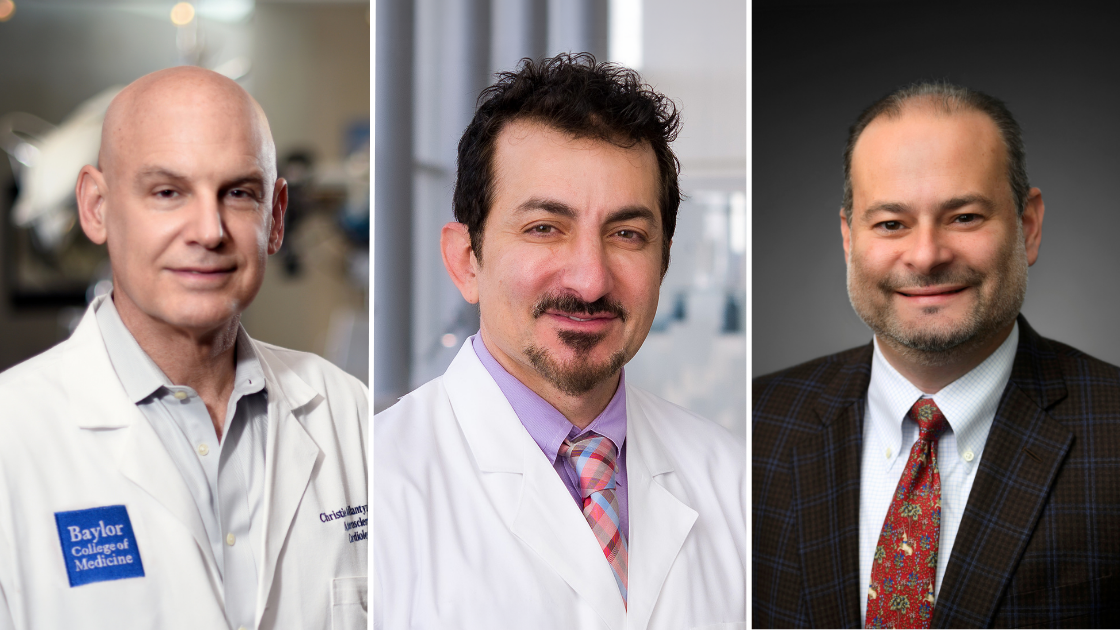
That gap is what brought Dr. Ballantyne together with Baylor’s Joshua Shulman, M.D., Ph.D., professor and director of the Center for Alzheimer’s and Neurodegenerative Diseases, and Ihab Hajjar, M.D., professor of Neurology and Medicine. Their goal is to better understand the heart-brain axis—the physiological connection linking the cardiovascular and nervous systems—and how this two-way network plays a critical role in a patient’s health.
Learning more about the heart-brain axis is especially important in the face of growing evidence that high blood pressure, high cholesterol, diabetes and inflammation, which are already known to damage blood vessels throughout the body, also damage the brain. It comes at a time when an aging population is facing mounting health concerns related to cardiovascular and brain health, especially in Texas.
“It’s crazy to care for someone and only care for their brain, ignoring the heart and the cardiovascular system,” Dr. Shulman said. “Patients want their doctors to work together.”
Each physician sees a different side of the problem. Dr. Hajjar, a geriatrician, points to surveys suggesting that as many as half of patients in cardiology clinics have some cognitive impairment, most of it undetected. Those patients are often managing complicated medication schedules; forgetting doses feeds a vicious cycle. In some memory clinics, the reverse is true: high blood pressure and cholesterol may go untreated.
To help combat this challenge, they are already building risk-assessment tools. Dr. Shulman expanded HeartCare, a genetic screening panel Dr. Ballantyne helped develop with Baylor’s Human Genome Sequencing Center, into NeuroCare, which adds dementia risk genes. More than 150 people have already received results, and Dr. Ballantyne now refers cardiology patients who want to understand their dementia risk.
The three physicians are also combining blood-based biomarkers from both fields to identify at-risk patients before symptoms appear. This work is especially impactful for a city as diverse as Houston, given that vascular risk for dementia may be particularly significant for Hispanic and African American populations.
Their research is also generating the early data needed to compete for major funding, including from the new Dementia Prevention and Research Institute of Texas, a voter-approved state initiative designed to accelerate research, prevention, diagnosis, treatment and care for Alzheimer’s disease and related dementias.
The three researchers agree that the heart-brain axis is a multifaceted problem deserving of a multifaceted solution, something that Baylor is particularly good at producing.
“At Baylor, there’s a high level of innovation with multiple specialties and disciplines coming together, which I don’t think is common or feasible in other places,” Dr. Hajjar said. “That’s why Baylor is primed for instituting clinical and research programs to address this problem from many angles.”