


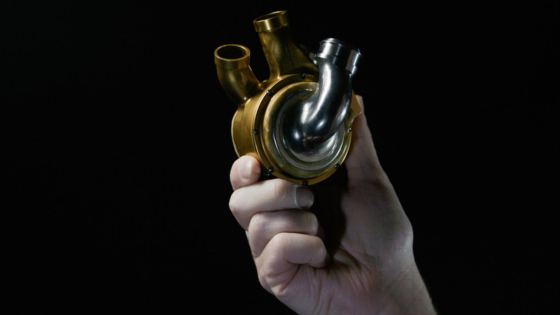
With ‘real momentum,’ total artificial heart technology faces defining chapter
Baylor College of Medicine’s innovative contributions to the development of the artificial heart were recently highlighted by the American College of Surgeons in a cover story about the turning point the field is at today. The article features William E. Cohn, M.D., FACS, a cardiothoracic surgeon at The Texas Heart Institute at Baylor College of Medicine. Learn how Baylor’s legacy of innovation is creating tomorrow’s medicine, today. Read the excerpt below and click the link at the end for the full story:
Few innovations in surgery carry the same mix of promise, controversy, and urgency as the total artificial heart.
For more than 6 decades, surgeons and engineers have attempted to replace the failing human heart with mechanical substitutes—often achieving short-term success, but repeatedly running into the same barriers, including hemolysis, infection, stroke, size constraints, and poor cyclic durability.
Today, however, a growing body of experimental and early clinical evidence suggests the field may be approaching a turning point. Rather than attempting to replicate the heart’s pulsatile mechanics, investigators are embracing continuous-flow designs built around dramatically simplified architectures—most notably, total artificial hearts with a single, magnetically levitated rotor and no valves, membranes, or points of mechanical wear.
Early experience with these devices indicates they may be capable of doing what prior generations could not: providing stable biventricular support with sufficient durability and physiologic adaptability to move beyond short-term rescue and into the realm of longer-term—and potentially permanent—therapy for end-stage heart failure.
For William E. Cohn, MD, FACS, a cardiothoracic surgeon at The Texas Heart Institute at Baylor College of Medicine in Houston, Texas, this moment represents the culmination of decades of work at the intersection of surgery, engineering, and translational science.
Continue reading here.