
Dr. George Perry has been honored with the 2026 Baylor College of Medicine Distinguished Alumnus Award for the Graduate School of Biomedical Sciences. View the full list of 2026 Awardees and Past Honorees here.
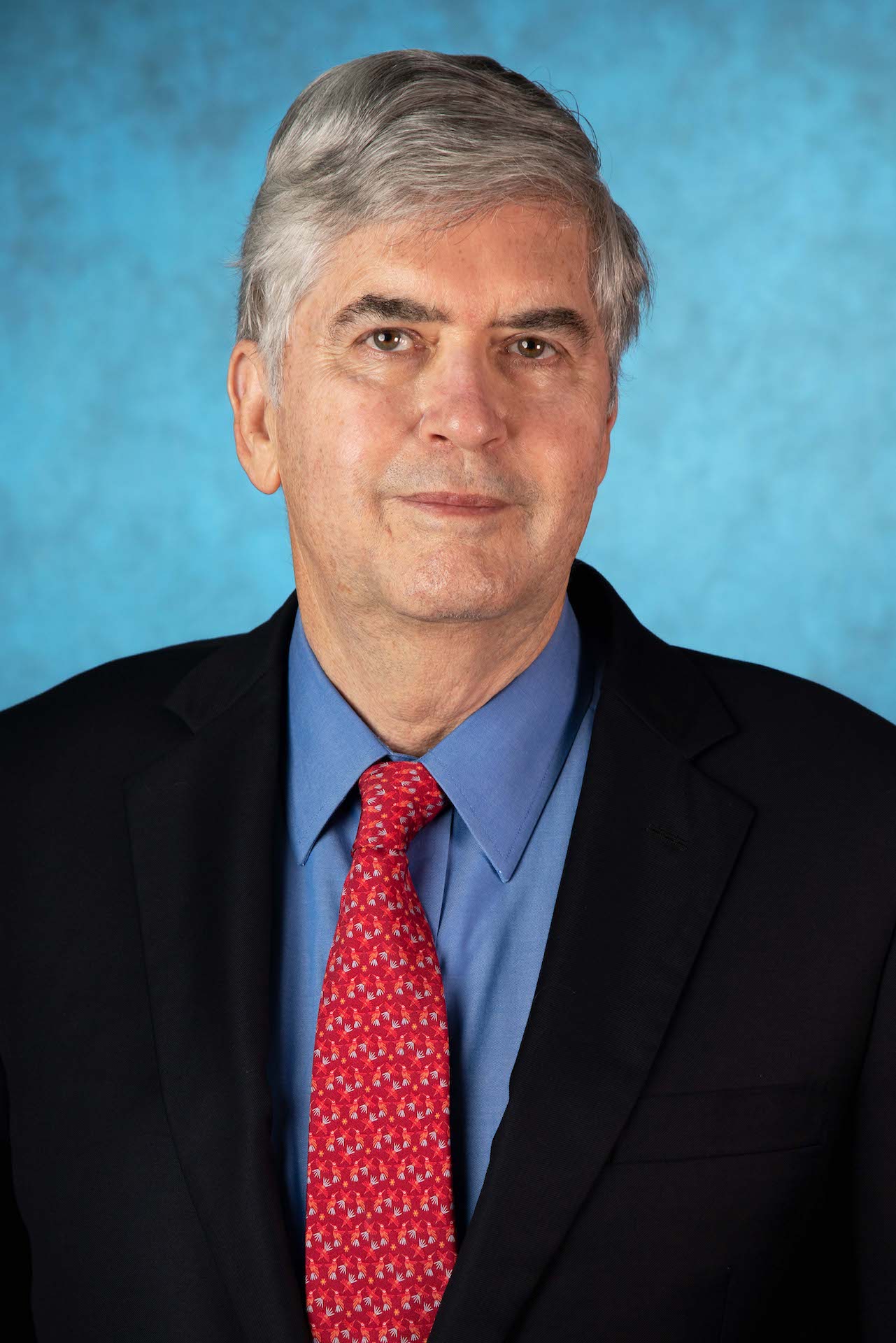
Dr. Perry is an internationally recognized Alzheimer’s disease researcher whose groundbreaking studies helped reveal the role of oxidative stress in neurodegeneration and reshaped scientific understanding of how Alzheimer’s disease develops. He is a professor and the Semmes Foundation Distinguished University Chair in Neurobiology at The University of Texas at San Antonio (UTSA). He is a former dean of Sciences at UTSA.
Dr. Perry received his Bachelor of Arts in zoology with high honors from the University of California, Santa Barbara. After graduation, he attended the Scripps Institution of Oceanography and obtained his Doctor of Philosophy in marine biology under David Epel, Ph.D., in 1979. He then completed a postdoctoral fellowship in 1982 in the laboratories of Bill Brinkley, Ph.D., and Joseph Bryan, Ph.D., in the Department of Cell Biology at Baylor College of Medicine. There, Dr. Perry laid the foundation for his observations of abnormalities in cell structures. In 1982, Dr. Perry joined the faculty of Case Western Reserve University and served as interim chair of Pathology; he still holds an adjunct appointment at Case Western today. He holds a Doctorado Honoris Causa (Hon. D.) from the Universidad Arturo Prat in Iquique, Chile.
He is distinguished as one of the top Alzheimer’s disease researchers, with over 1500 publications. He holds the distinction as one of the top 100 most-cited scientists in neuroscience and behavior, top 100 most-cited scientists in biochemistry, and top 10 most-cited scientists in free radical research.
He is founder and editor-in-chief of the Journal of Alzheimer’s Disease. He is a fellow of the American Association for the Advancement of Sciences, Texas Academy of Sciences, International Engineering and Technology Institute, Association of Biotechnology and Pharmacy, Linnean Society of London, Royal Society of Chemistry, Royal Society of Arts, Manufactures and Commerce, Royal Society of Biology, Microscopy Society of America, Royal College of Pathologists, Royal Microscopical Society, World Academy of Medical Sciences, EU Academy of Sciences and Royal Society of Medicine, and Sigma Xi. He is a past president and an interim executive director of the Southwestern and Rocky Mountain Division of the American Association for the Advancement of Science, and a past president of the American Association of Neuropathologists.
He was awarded the Society for the Advancement of Chicanos and Native American in the Sciences’ Distinguished Professional Mentor Award, the Senior Investigator Award of the International College of Geriatric Psychoneuropharmacology, Top Expert in Alzheimer’s disease from Expertscape, Best Scientist-Research.com, Martin Goland Award of the Alamo Chapter of Sigma Xi, Udaan Award, Senior Fulbright Scholar, Rous-Whipple Award – American Society for Investigative Pathology, Distinguished Texas Scientist – Texas Academy of Sciences, and the National Plaque of Honor of Panama for Excellence in Neuroscience. Dr. Perry was elected as a foreign corresponding member of the Academy of Sciences of Lisbon, foreign correspondent member of the Spanish Royal Academy of Sciences, corresponding member of the Mexican Academy of Sciences, member of the Dana Alliance for Brain Initiatives, member of the Iberoamerican Molecular Biology Organization, Portuguese Diaspora Council, former chair of the National Organization of Portuguese Americans and councilor to the ambassador of Portugal to the United States.
Dr. Perry’s research is primarily focused on understanding how Alzheimer’s disease develops and the physiological consequences of the disease at a cellular level. His pioneering studies uncovered evidence that oxidative stress, damage caused by unstable molecules known as free radicals, occurs early in the disease process and may play a central role in the loss of brain cells. This work reshaped scientific thinking about the origins of Alzheimer’s disease and informed new approaches to prevention and treatment. He is currently investigating the sequence of events that gives rise to this cellular damage and the biological mechanisms that drive it.